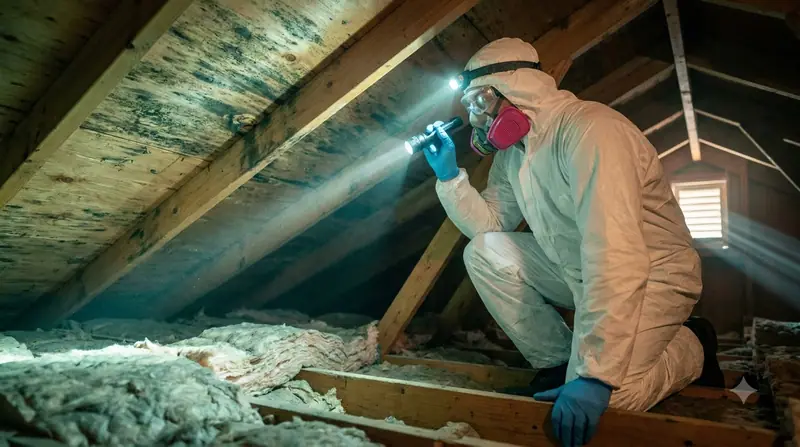
How attic mold forms in Herriman winters
Herriman sits at about 5,000 feet, and winter nights get cold enough that the underside of the roof deck drops below freezing. Meanwhile, the house is full of warm air carrying moisture from showers, cooking, laundry, breathing and humidifiers. When that air reaches the attic, it hits the cold sheathing and frosts. When the weather warms, the frost melts into the wood. Repeat that for a few winters and the roof deck develops dark staining and mold.
The moisture gets into the attic in a few ways:
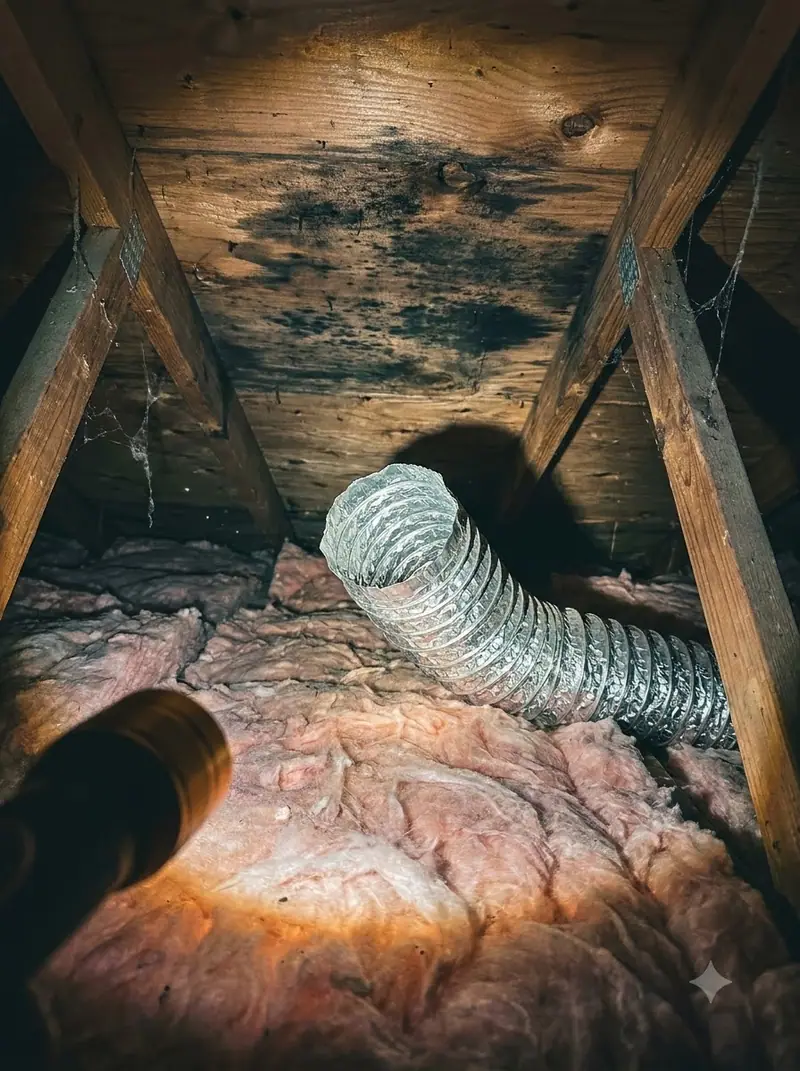
- Bathroom and kitchen fans that vent into the attic. Building codes require exhaust fans to discharge outdoors, not into the attic, a soffit or a ridge vent. Ducts that were never connected, came loose, or end just short of a roof or wall cap are common culprits.
- Air leaks through the ceiling. Recessed lights, the attic hatch, plumbing stacks, wiring holes and duct penetrations let warm air rise into the attic.
- Blocked or unbalanced ventilation. Insulation stuffed into soffits, or mixed vent types that fight each other, keep damp air from leaving.
- Ice dams and roof leaks. Meltwater backing up under shingles at the eaves, or a small flashing leak, soaks the same boards every storm.
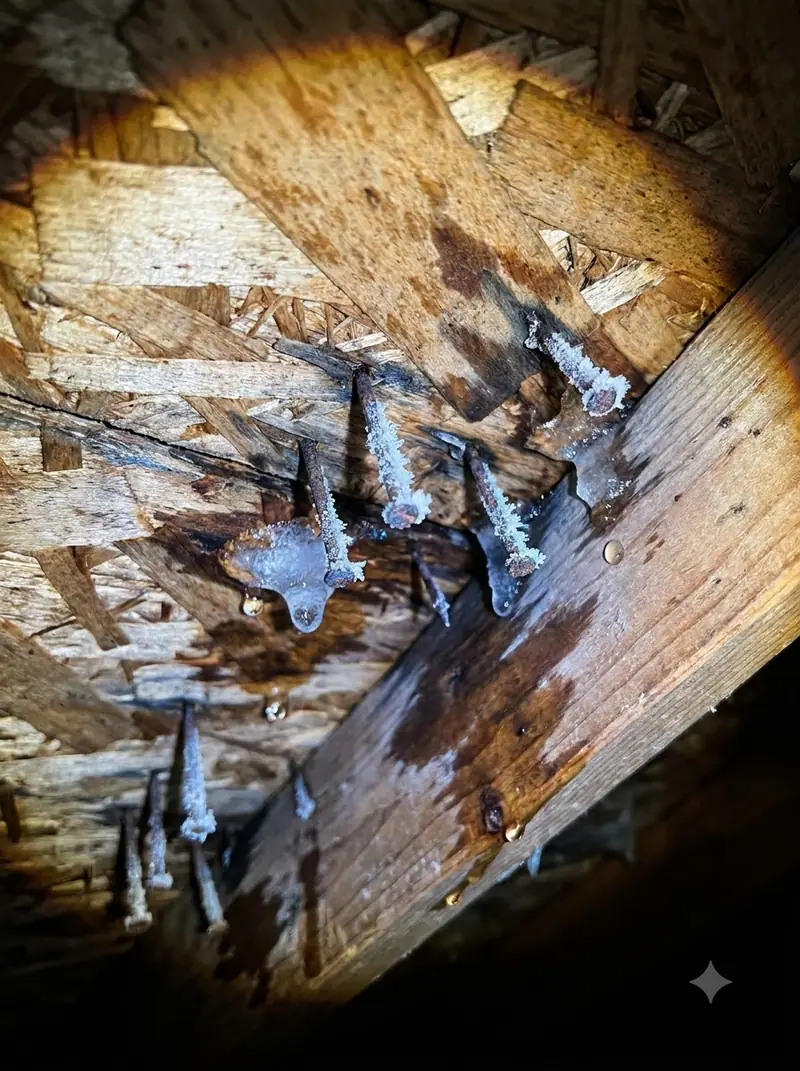
Signs of attic mold
- Dark gray or black staining on the underside of the roof sheathing, often heaviest on the north side or above bathrooms
- Frost or ice on nails and sheathing on cold winter mornings
- Water dripping from a bathroom fan grille or ceiling light in cold weather
- Damp, matted or stained insulation
- A musty smell in upstairs rooms or when the attic hatch is opened
- Ice dams along the eaves, or rusted nail tips poking through the sheathing
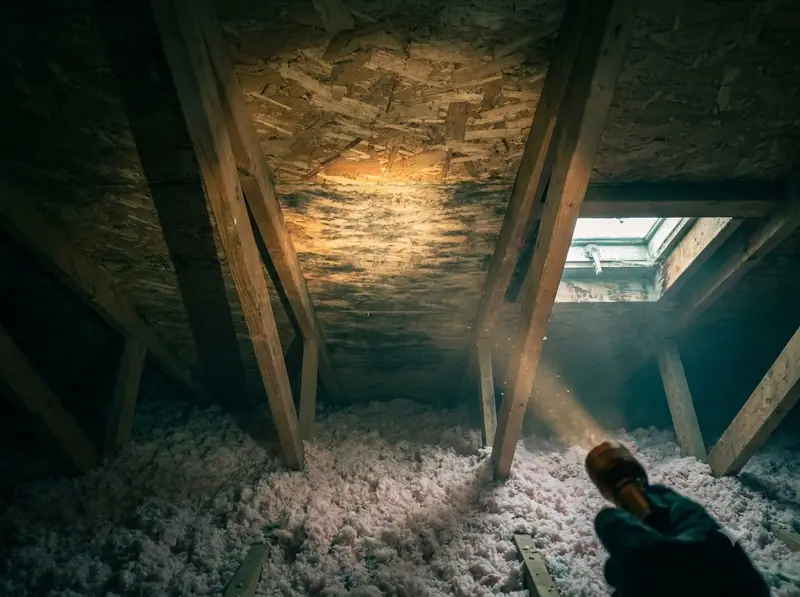
How professionals remove attic mold
Attic remediation looks different from a basement job, because roof sheathing is structural and is cleaned in place rather than torn out, unless it's rotted. Common approaches include:
| Method | What it is | Things to ask |
|---|---|---|
| HEPA vacuum and hand cleaning | Sheathing and framing are HEPA-vacuumed and wiped or scrubbed | How staining will be handled, since cleaned wood can stay discolored |
| Media blasting | Soda or dry ice is blasted at the wood to remove growth from the surface | Containment, cleanup of blast residue and protection of the living space |
| Wood replacement | Rotted or delaminated sheathing is cut out and replaced, usually with roofing work | Who does the roofing and whether it's in the estimate |
| Coating after cleaning | Some companies apply an antimicrobial or mold-resistant coating once wood is clean and dry | Whether it's a finish step or a substitute for removal. It should only be a finish step. |
Wet or contaminated insulation is usually removed and replaced after the sheathing is cleaned. Because attics are hard to work in and share air with the house through ceiling gaps, containment and air filtration still matter.
Fixing the cause so it doesn't come back
Cleaning attic mold without fixing the moisture means you'll see it again next winter. A complete job usually includes some combination of:
- Extending bathroom and kitchen exhaust ducts to a proper roof or wall cap, with insulated duct in the cold attic to limit condensation
- Air-sealing the ceiling plane: around recessed lights, the attic hatch, plumbing stacks and wire penetrations
- Clearing soffit vents with baffles and balancing intake and exhaust ventilation
- Adding or evening out insulation once the ceiling is sealed
- Repairing roof leaks, flashing or ice dam problems with a roofer
- Keeping indoor humidity between 30 and 50 percent in winter
When our team does professional mold removal in Herriman, the cause goes in the written scope, not just the cleaning.
Older homes, like the pre-1990s houses in parts of Riverton, often have less insulation and more ceiling air leaks. Larger newer homes in places like Rosecrest often have several bathrooms whose fans all need to reach the outdoors. It's worth having each one checked.
Is attic mold an emergency?
Usually not an emergency, but it shouldn't wait for years either. Attic mold on sheathing typically develops slowly over several winters, and the attic is separated from living space. Act sooner if water is dripping through ceilings, if the wood is soft or delaminating, or if someone in the home is sensitive to mold. A mold inspection can confirm the extent before a buyer's inspector finds it for you.
What affects the cost of attic mold removal
Price depends on the square footage of affected sheathing, attic access and headroom, the removal method, whether insulation is removed and replaced, and what venting, air sealing or roofing repairs are needed. Some of those repairs may be separate trades. We give you a written estimate after inspecting the attic. For the bigger picture on local mold remediation in Herriman, including when a small job is safe to handle yourself, see our main page.
Frequently asked questions
Why is there frost in my attic in winter?
Frost forms when warm, moist air from the house reaches cold roof sheathing. The most common causes are bathroom fans venting into the attic, air leaks around lights and the hatch, and blocked soffit vents. A little frost on nail tips in very cold weather can occur; heavy frost across the sheathing points to a moisture problem.
Does attic mold affect the air in my house?
It can. Attics connect to living space through ceiling gaps, light fixtures and the hatch, so some air exchange is normal. That's one reason remediation includes containment and air sealing. If anyone in the home has asthma or mold sensitivity, let our team know when you call.
Do I need to replace my roof if the attic has mold?
Usually not. Most attic mold is surface growth on sheathing that can be cleaned in place. Replacement is only needed where the wood is rotted, soft or delaminated. If a roof replacement is already planned, it can make sense to coordinate the two jobs.
Will a new bathroom fan fix attic mold?
Only if the problem is ventilation and the new fan is ducted outdoors. A new fan that still dumps into the attic makes things worse. The existing mold also has to be cleaned, and other air leaks or roof problems addressed.
Will attic mold show up on a home inspection?
Often, yes. Home inspectors routinely look into the attic and commonly note staining on sheathing, bathroom fans that terminate in the attic and damp insulation. Addressing it before listing, with documentation, avoids surprises during a buyer's due-diligence period.