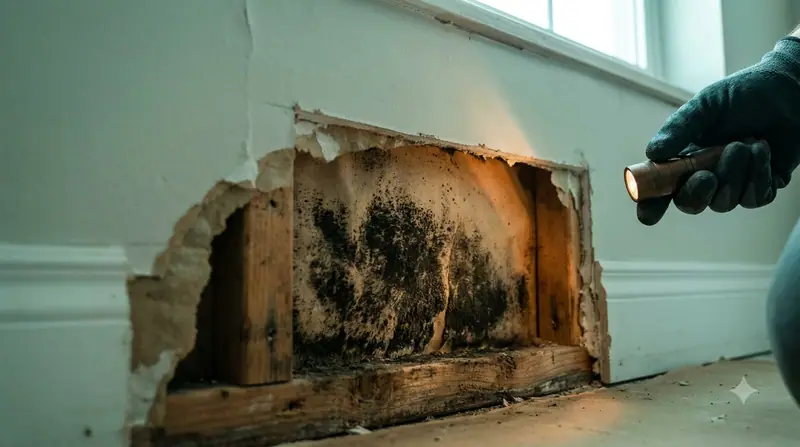
What is black mold?
Black mold is a common name, not a scientific category. It's most often used for Stachybotrys chartarum, which needs materials that stay wet for days or weeks, such as drywall paper, ceiling tiles and wood soaked by a leak. Plenty of other molds, including common species of Cladosporium and Aspergillus, also look dark gray, green or black.
You can't identify mold by looking at it, and you don't need to. The CDC says it's not necessary to determine the type of mold in a home. All indoor mold growth should be treated the same way when it comes to health risk and removal. What does matter is how much there is, what it's growing on, and why that material stayed wet.
Where black mold shows up in Herriman homes
- Bathroom ceilings and corners. Showers put a lot of moisture into a small room. If the fan is undersized, not ducted properly or not used, dark spotting shows up on the ceiling above the tub first.
- Behind and under toilets and vanities. A slow drip from a supply line or wax ring can soak the subfloor and drywall for months.
- Basement drywall after water gets in. The bottom foot of drywall wicks water from wet carpet or a flooded window well. See basement mold removal.
- Window sills and exterior-wall closets. Winter condensation runs down cold glass and collects on sills and trim.
- Attic sheathing. Dark staining on the underside of the roof deck is often mold fed by winter frost. See attic mold removal.
Is black mold dangerous?
Black mold isn't automatically more dangerous than other indoor mold, but no mold growth should be left in a home. The CDC lists possible reactions to mold exposure including stuffy nose, sore throat, coughing, wheezing, burning eyes and skin rash, and notes that people with asthma, mold allergies, chronic lung disease or weakened immune systems can have stronger reactions. If anyone in your household has symptoms, talk to a medical provider.
Be cautious of anyone who uses the word "toxic" to create urgency before they've assessed your home. When our team handles Herriman mold remediation, we explain what we see, what caused it and what the plan is before any work starts.
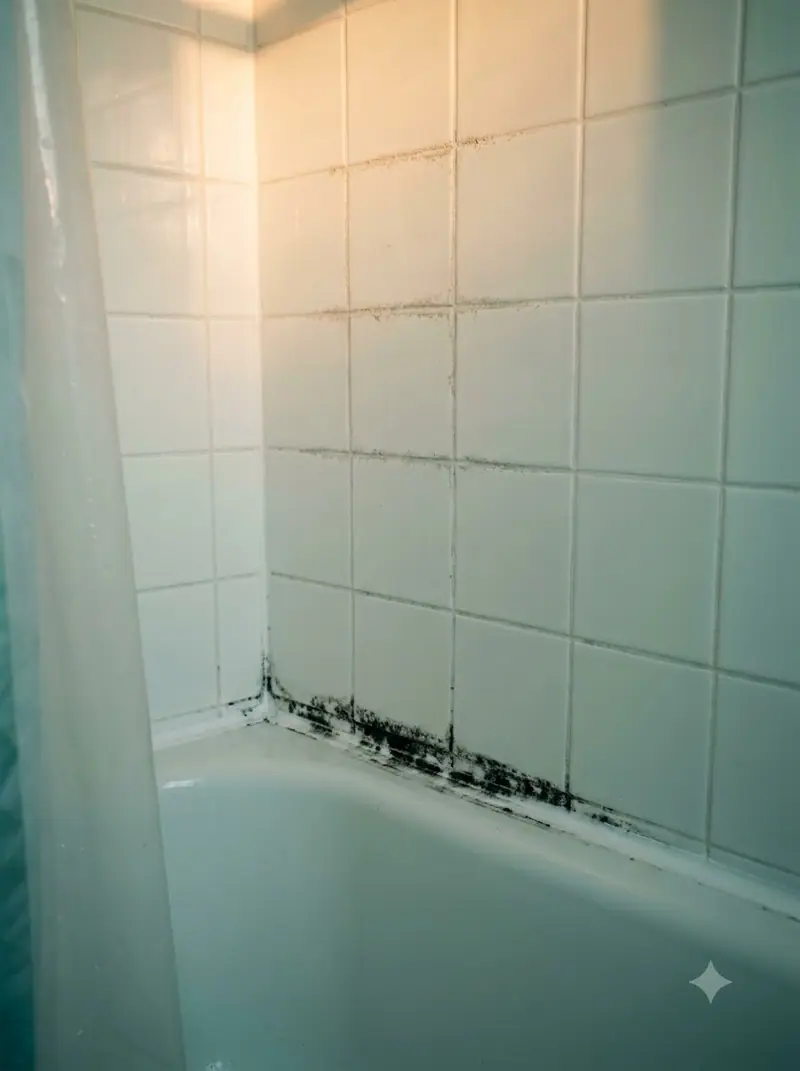
Black mold or mildew?
| Surface mildew | Mold growth in materials | |
|---|---|---|
| Where | On top of non-porous surfaces: tile grout, caulk, shower glass | In porous materials: drywall, wood, insulation, carpet backing |
| Looks like | Flat gray or black film that wipes off | Fuzzy or slimy patches, staining that returns, soft or damaged material |
| Usual fix | Clean with detergent, dry, improve ventilation | Contain, remove the affected material, dry, fix the source |
The EPA notes that bathroom mold which keeps coming back on surfaces can usually be kept down with better ventilation and more frequent cleaning. When it's in the drywall or keeps returning in the same spot, something behind it is staying wet.
Why scrubbing black mold yourself can backfire
- Disturbing it spreads spores. Dry brushing, sanding or tearing out moldy drywall without containment can move spores into other rooms and into your HVAC system.
- Porous materials can't really be cleaned. Mold grows into the paper and gypsum of drywall. The EPA says porous materials that become moldy may need to be thrown away.
- Bleach isn't the answer. The EPA doesn't recommend routine use of biocides like bleach for mold cleanup, and bleach doesn't fix the moisture that caused the growth.
- The hidden part is usually bigger. Visible spots on one side of a wall often mean more growth on the back of the drywall or on framing.
For a small area under about 10 square feet on a hard surface, EPA guidance says a homeowner can often handle it with gloves, an N-95 respirator and goggles. Anything bigger, anything in the drywall, or anything that keeps returning is a job for mold remediation services in Herriman, UT.
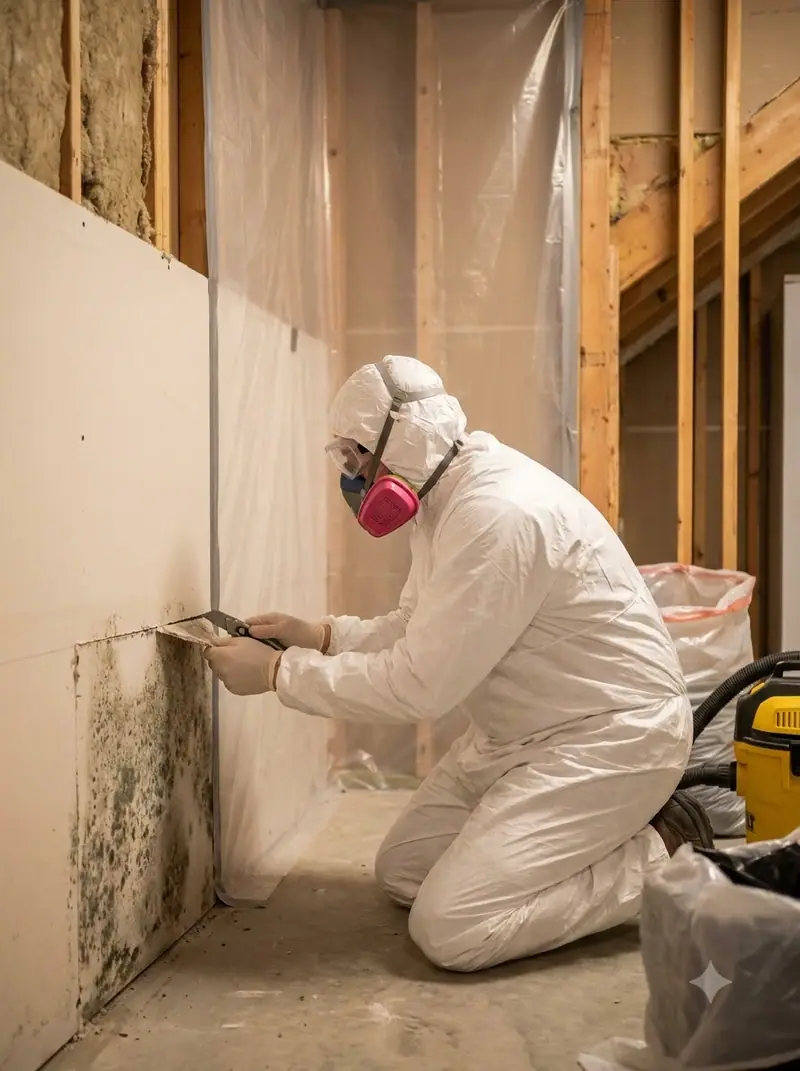
How our team removes black mold
Assess and find the moisture
We take moisture readings around and behind the growth to see how far wet materials extend. If the extent is unclear, we may recommend a mold inspection first.
Contain the area
Our technicians put up plastic sheeting, seal vents and doorways, and often run a HEPA air scrubber to create negative pressure.
Remove affected materials
We cut moldy drywall out beyond the visible edge, bag it inside containment and remove it. Framing and other hard surfaces are cleaned.
HEPA vacuum and clean
We HEPA-vacuum and wipe surfaces inside containment to remove settled spores and debris.
Dry and fix the source
Materials are dried to normal levels and the cause is corrected, whether that's a plumbing leak, a fan duct or a drainage problem.
Verify, then rebuild
A final visual check and moisture readings, sometimes clearance testing, before new drywall goes up.
Black mold in rentals and attached homes
Bathrooms that share a wall or ceiling with another unit are common in townhomes and apartments. If you rent, notify your landlord in writing. If you own a townhome, check your HOA's rules to see who is responsible for the plumbing or wall involved. Our Herriman Towne Center page covers how shared-wall mold problems usually get sorted out.
What affects the cost of black mold removal
Cost comes down to the square footage of affected material, how much containment is needed, whether growth extends inside the wall or ceiling, what the moisture source repair involves, and whether rebuild and clearance testing are included. We give you a written estimate after seeing the space in person.
Frequently asked questions
How can I tell if it's black mold?
You can't tell reliably by color. Many molds look black, and lab analysis is the only way to identify a species. The CDC says identification generally isn't necessary, because all indoor mold growth should be removed the same way. Focus on how big the area is, what it's growing on and what's keeping it wet.
Should I get black mold tested before removal?
Usually not if the growth is visible. The EPA says sampling generally isn't necessary when you can see mold. Testing can help if you need documentation for a sale, a landlord or an insurer, or to confirm the area is clean after remediation. Otherwise, put the budget toward removal and fixing the moisture.
Can black mold come back after removal?
Yes, if the moisture source isn't fixed. Mold removal clears existing growth, but spores are always present in indoor air. Keep materials dry and humidity between 30 and 50 percent, fix leaks promptly, and make sure bathroom fans vent outdoors.
Can I paint over black mold?
No. Paint, including mold-resistant primer, doesn't remove growth that's already in drywall or wood, and it hides the evidence of an ongoing leak. Mold-resistant coatings are sometimes applied after proper removal and drying, but never as a substitute for it.
Is black mold removal covered by insurance?
It depends on the policy and on what caused the mold. Mold from a sudden, covered event like a burst pipe is more likely to be considered than mold from a long-term leak or humidity. Many policies cap mold coverage. Photograph everything and call your insurer before removal begins.