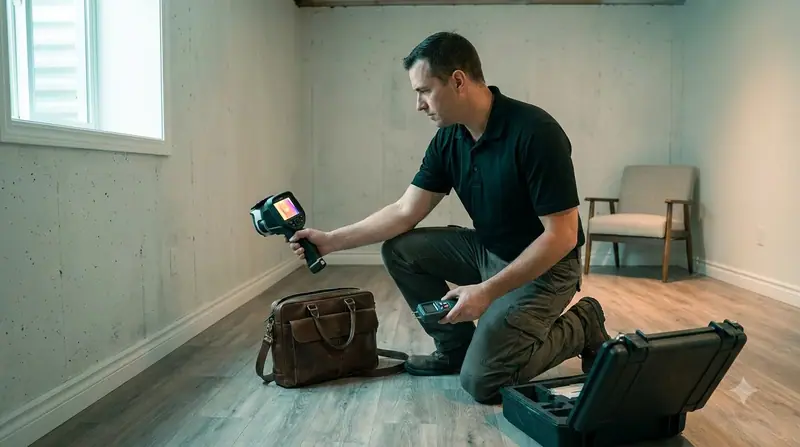
Inspection or testing: which do you need?
You probably need an inspection. Testing is a tool inside an inspection, not a replacement for one. An inspector who only takes an air sample, without looking for moisture, can tell you spores are present but not where they're coming from.
| Mold inspection | Mold testing | |
|---|---|---|
| What it is | Visual walk-through plus moisture readings of walls, floors, ceilings and HVAC areas | Air, tape-lift, swab or wall-cavity samples sent to a lab |
| Best for | Finding the source and extent of a problem | Hidden growth, clearance after remediation, disputes and documentation |
| What you get | Findings, photos, moisture map and recommendations | Lab report with spore types and counts, compared with an outdoor sample |
When a mold inspection makes sense
- You smell mold but can't see it. A musty basement bedroom or closet often points to growth behind drywall, under carpet or inside a wall cavity.
- There was a leak or flood. If water sat for more than 24 to 48 hours, an inspection shows whether it reached insulation, framing or the bottom plate of the walls.
- You're buying or selling a home. Utah home purchases usually include a due-diligence period. An inspection report gives buyers something concrete to negotiate on and gives sellers a record of the property's condition.
- Remediation just finished. Post-remediation verification, or clearance testing, confirms the work area is clean and dry before walls are closed.
- You rent and need documentation. Utah's Fit Premises Act puts maintenance duties on landlords, and a written report helps both sides agree on what's there.
When testing usually isn't necessary
If you can already see mold, you generally don't need a lab to confirm it. The EPA says sampling usually isn't needed when growth is visible, and the CDC says there's no need to identify the species of mold in a home, since all indoor growth should be removed the same way. Put the money toward removal and fixing the moisture. Testing earns its cost when the answer to "where is it and how far does it go?" isn't visible.
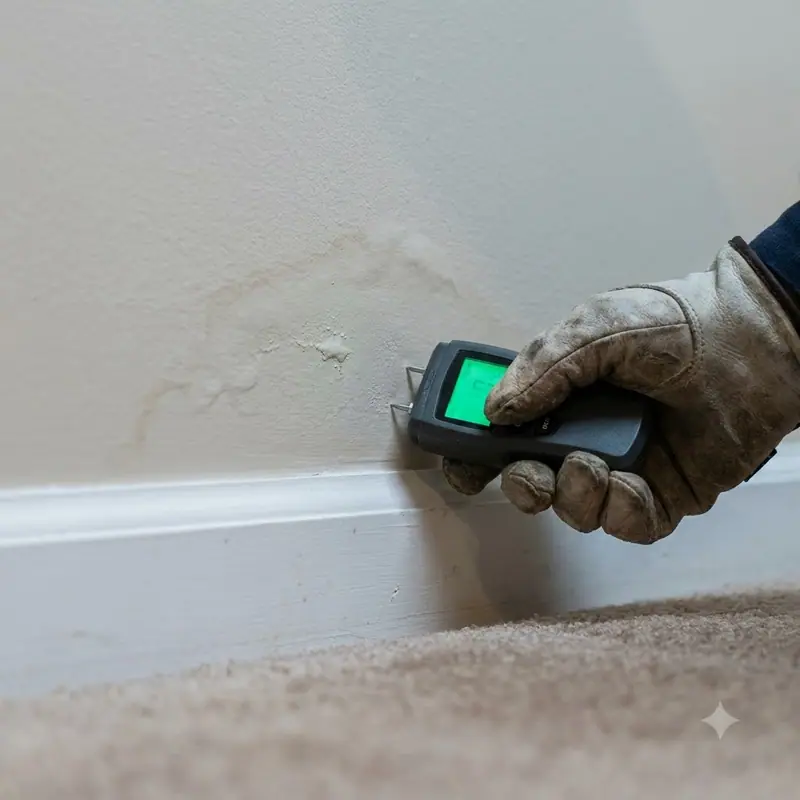
What happens during a mold inspection
History
We ask about leaks, floods, odors, remodels and anyone in the home with symptoms.
Visual walk-through
Attic, bathrooms, under sinks, around windows, the furnace and water heater area, and the basement, including walls behind furniture and along window wells.
Moisture mapping
Moisture meters and a hygrometer show wet materials and indoor humidity. A thermal camera shows temperature differences that can indicate moisture. It can't see mold itself.
Sampling, if warranted
Indoor air samples are compared with an outdoor sample taken the same day. Tape lifts or swabs identify visible growth, and wall-cavity samples check behind drywall without opening it.
Report
You get photos, readings, lab results if taken, and clear recommendations: what needs removal, what needs drying, and what caused it.
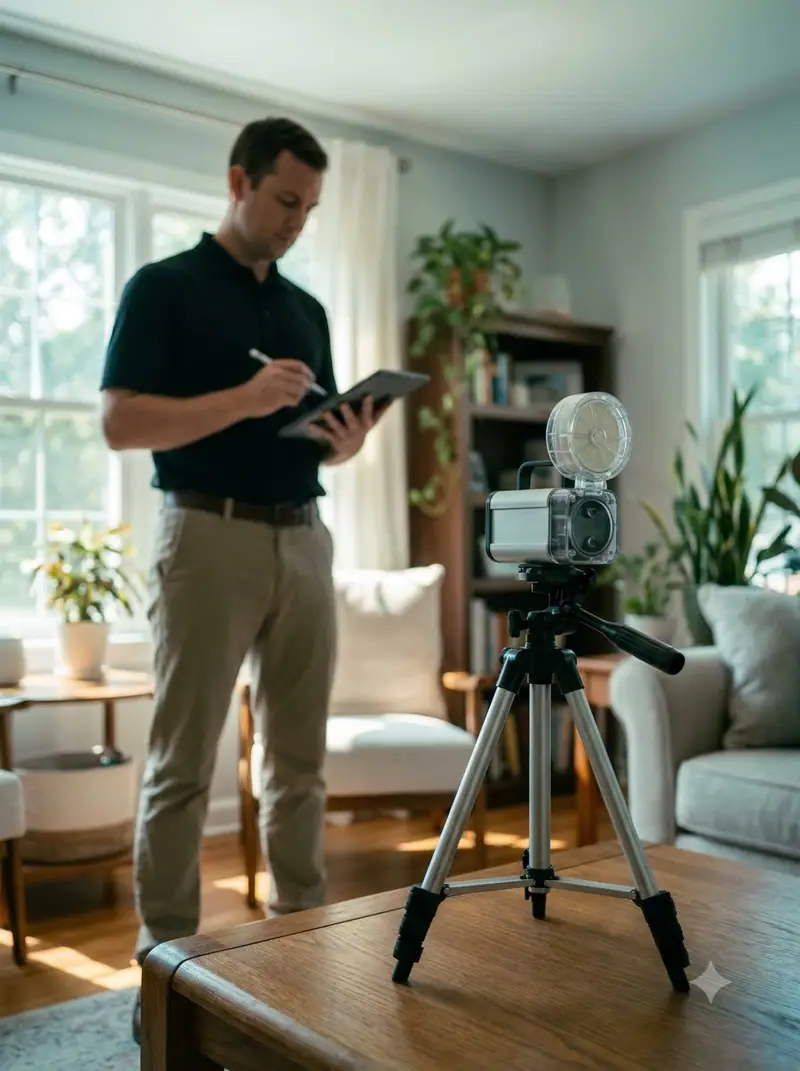
How to read mold test results
Air sample results mean little on their own. Indoor spore counts rise and fall with vacuuming, doors opening and the furnace cycling, and outdoor levels in the Salt Lake Valley change with season and weather. What matters is the comparison. Indoor counts well above the outdoor sample, or spore types indoors that barely appear outside, suggest an indoor source. Whoever tests your home should walk you through the report, not just hand it over.
Independent inspector or remediation company?
Some mold companies inspect and test. Others only remove mold and leave testing to a separate inspector, so the company doing the removal isn't also the one deciding how much needs removing. Both models exist in Utah, and either can be part of mold remediation in Herriman done well. Our team does both inspection and remediation. If you'd prefer a separate party for testing or clearance, you can hire an independent inspector for that part of the job.
What Herriman inspections commonly check
Based on how local homes are built and used, our inspections in the Herriman area routinely look at a few spots:
- Roof sheathing above bathrooms, where fans sometimes vent into the attic instead of outdoors. See attic mold removal.
- Basement bedrooms and family rooms beside window wells, the classic spot for hidden growth after spring snowmelt. See basement mold removal.
- The drywall behind washers, under kitchen sinks and around water heaters.
- Exterior-wall closets and window sills that collect winter condensation.
For buyers, the question is often whether a finished basement hides old water damage. That's especially true when looking at resale homes in established neighborhoods, and it's still worth checking in newer areas like South Jordan's Daybreak community, where fast construction and tight building envelopes can trap moisture.
What affects the price of an inspection
Inspection pricing typically depends on the size of the home, how many areas need checking, the number of samples taken, lab turnaround time, and whether you need a formal written report for a transaction or insurance claim. Call us for the price and what's included before you book. If the inspection finds active growth, the next step is professional mold removal in Herriman: our crew contains, removes and dries the affected area, with a written estimate first.
Frequently asked questions
How much does a mold inspection cost in Herriman?
Pricing depends on the size of the home, the number of areas checked, how many samples go to the lab and whether you need a formal report. Some remediation companies offer a free visual assessment, while independent inspectors usually charge a set fee. Call us for the price and what's included before you book.
Can a home inspector test for mold?
A general home inspector may note visible growth or moisture, but a standard home inspection usually doesn't include mold sampling. If the report flags possible mold or water damage, a dedicated mold inspection can confirm the source and extent before your due-diligence deadline passes.
Are DIY mold test kits worth it?
Settle plates and similar kits almost always grow something, because mold spores are present in all indoor air. Without an outdoor comparison and a trained eye for moisture, the result rarely tells you whether you have a problem. A professional inspection is more useful.
How long do mold test results take?
Visual findings and moisture readings are available during the visit. Lab results for air and surface samples typically take a few business days depending on the lab, and rush processing is often available for an extra fee. Ask us about the expected turnaround when you schedule.
What is mold clearance testing?
Clearance testing, or post-remediation verification, happens after cleanup but before walls are closed. It combines a visual check, moisture readings and usually air samples to confirm the area is clean and dry. Many homeowners use an inspector who didn't do the removal, and you can hire an independent inspector for clearance after our work.