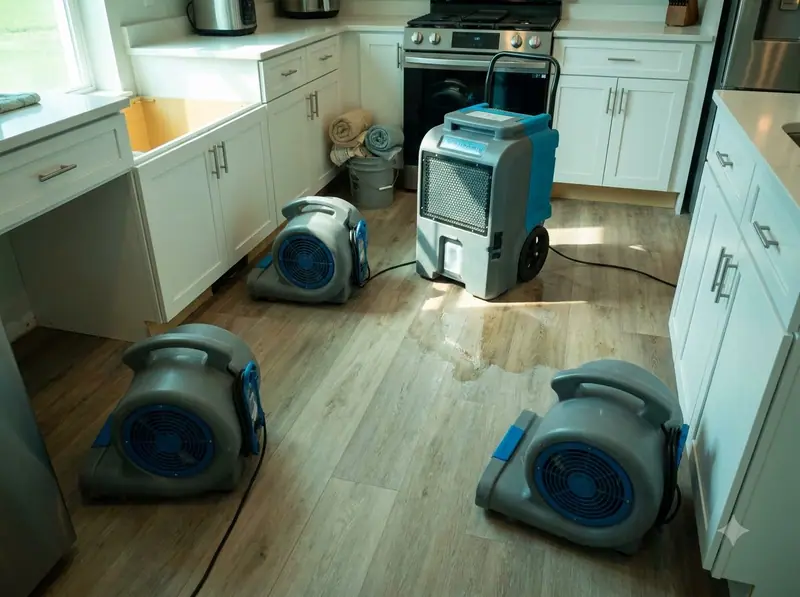
First steps after a leak or flood
If water is coming in right now, safety and stopping the source come first. Then document, then dry.
Stay safe around electricity
Don't walk into standing water if outlets, cords or appliances may be submerged. If you can safely reach the breaker panel, shut off power to the affected area.
Stop the water
Close the fixture valve or the home's main water shutoff for a plumbing leak. For a water heater, shut off its cold-water supply and its gas or power.
Photograph everything
Take photos and video of the water, the source and damaged belongings before cleanup. Your insurer will want them.
Remove what you safely can
Mop or wet-vac standing water, lift furniture onto blocks, and move rugs, boxes and electronics out of wet areas.
Call for drying
Household fans rarely dry wall cavities, carpet pad or framing in time. Professional drying equipment and moisture monitoring are what beat the 24-to-48-hour window.
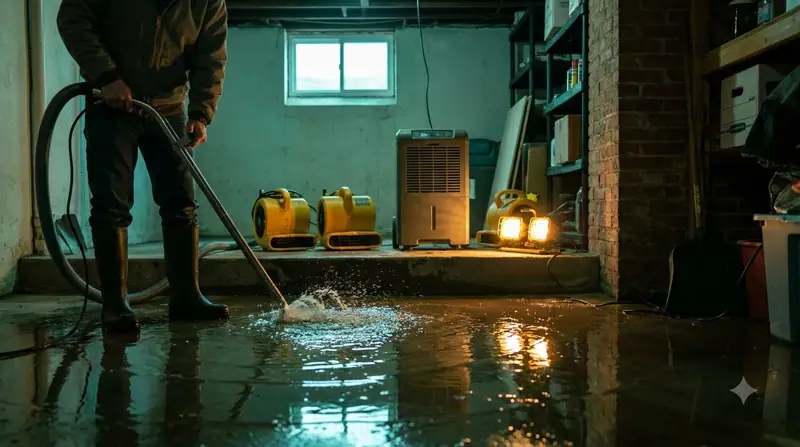
Why the 24-to-48-hour window matters
Mold spores are already present in every home. They just need moisture. The EPA advises drying water-damaged areas and items within 24 to 48 hours to prevent mold growth. Drywall, carpet pad, insulation and the bottom plates of walls soak up water fast and hold it, so a floor that feels dry on top can still be wet underneath days later. That's how a water problem turns into a job for mold remediation specialists in Herriman.
Clean, gray and black water
Restoration companies classify water by contamination level, following the IICRC S500 standard for water damage restoration. The category changes what can be saved:
| Category | Typical sources | What it means |
|---|---|---|
| Category 1: clean water | Burst supply line, water heater, sink overflow | Many materials can be dried in place if you act quickly |
| Category 2: gray water | Washing machine or dishwasher discharge, some toilet overflows | Carries contaminants; carpet pad and porous items are often removed |
| Category 3: black water | Sewage backup, flood water from outside, long-standing water | Porous materials in contact are generally removed; professional cleanup needed |
Clean water that sits for days can degrade into a higher category, which is one more reason to move quickly.
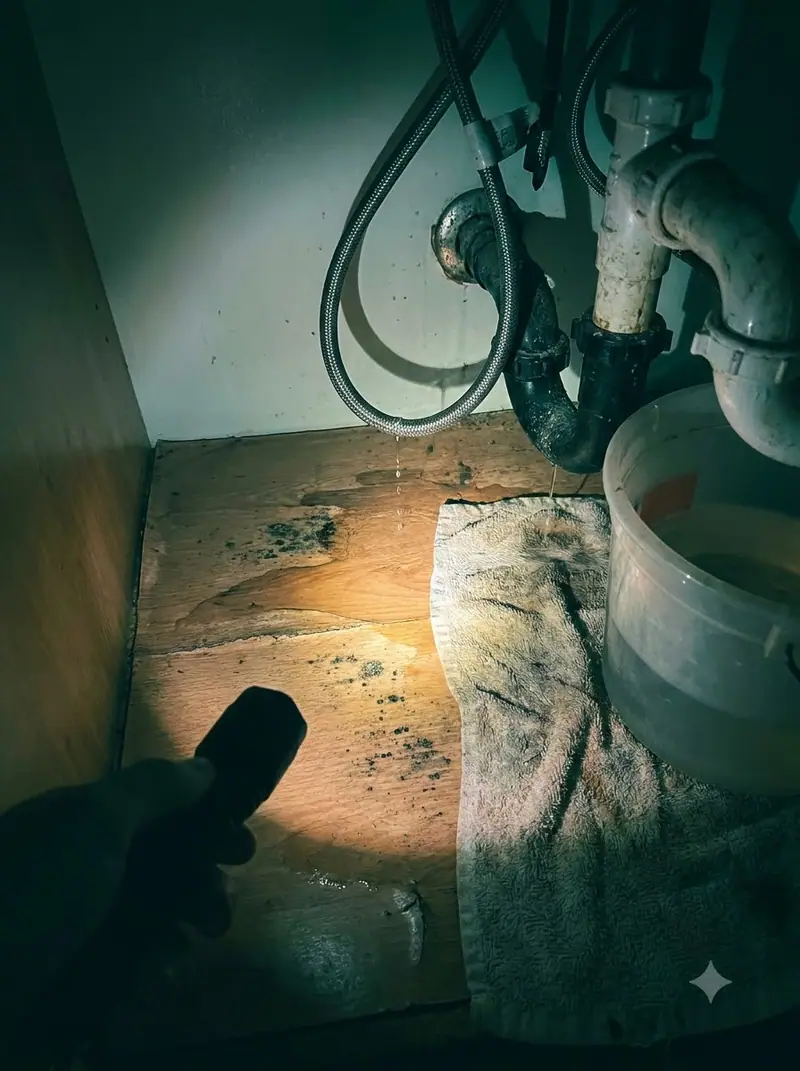
Common water damage in Herriman homes
- Frozen and burst pipes during winter cold snaps, especially in pipes along exterior walls, in garages and at hose bibs
- Water heater failures in basement mechanical rooms and townhome utility closets
- Washing machine hoses and toilet supply lines that crack with age
- Window wells and runoff during spring snowmelt and summer cloudbursts. See basement mold removal.
- Sprinkler and irrigation line breaks near the foundation
- Leaks between units in townhomes and apartments. See Herriman Towne Center.
How professional drying works
A drying job is measured, not guessed. Our technicians map moisture with meters, remove materials that can't be saved, and place dehumidifiers and air movers to pull water out of the structure. Readings are usually taken daily until materials reach normal levels, and the equipment isn't pulled until they do. Walls may get small holes or flood cuts so air can reach inside the cavity. Expect several days of equipment running for a typical basement or room.
When mold has already started
If the water sat for more than a couple of days before anyone found it, say a slow leak behind a vanity or a flooded storage room, mold may already be growing. In that case the job shifts from simple drying to remediation, with containment, removal of moldy materials, HEPA cleaning and verification. Because our team handles both water damage and mold removal and remediation in Herriman, we can usually do both in one project. If you can't tell how far it spread, a mold inspection answers that before walls are rebuilt.
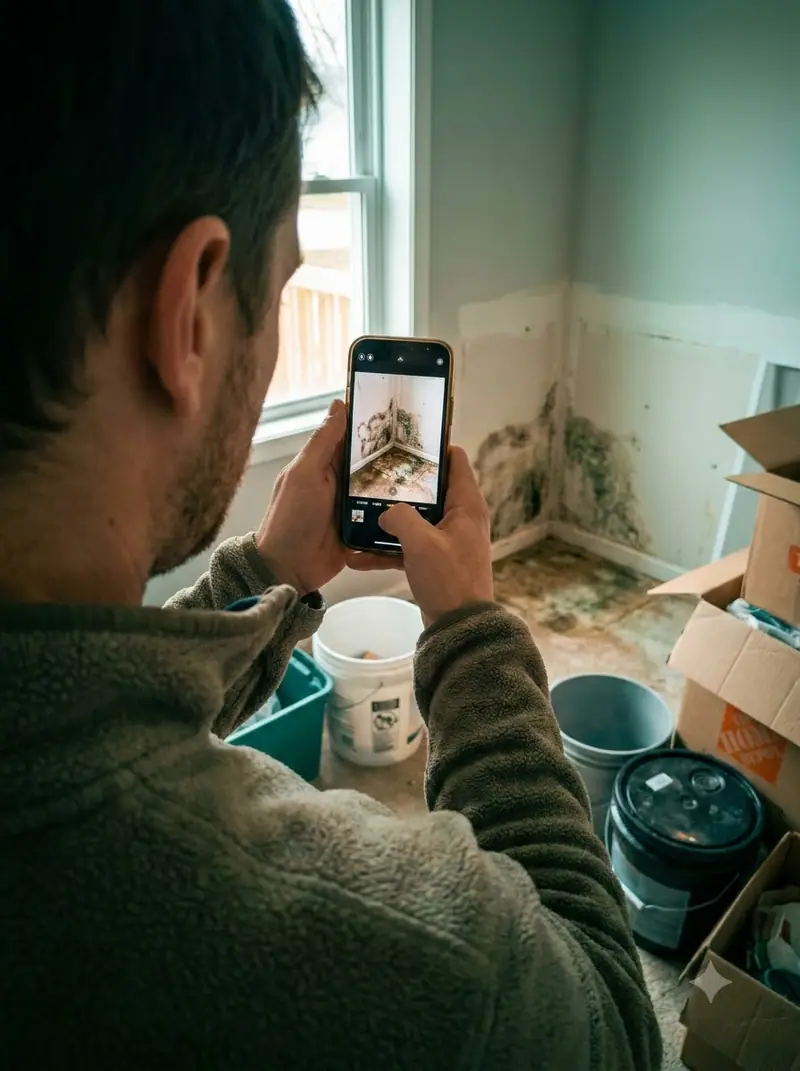
Insurance and documentation
Many homeowners policies treat sudden, accidental water damage differently from long-term leaks, and many limit mold coverage. Call your insurer early, keep damaged items until an adjuster says otherwise, save receipts, and ask us for the moisture logs and photos from your job. Those records support your claim. If you rent, notify your landlord in writing right away.
What affects the cost of water damage cleanup
Cost depends on how much area got wet, the water category, how many materials must be removed, how many days of drying equipment are needed, whether mold remediation is required and how much rebuild follows. We give you a written estimate after an on-site assessment and can document the job with photos and moisture readings for your insurer.
Frequently asked questions
How fast does mold grow after water damage?
Mold can begin growing within 24 to 48 hours on materials that stay wet, which is why the EPA recommends drying water-damaged areas in that window. Visible growth may take longer to appear, but by then it's often already inside drywall or carpet pad.
Can I dry a flooded basement with fans?
Household fans can help with surfaces, but they rarely dry wall cavities, framing, carpet pad or concrete fast enough. Without moisture readings you won't know when materials are truly dry. Professional dehumidifiers, air movers and daily monitoring are designed to do exactly that.
Should I pull up wet carpet myself?
If it's safe, lifting wet rugs and moving furniture helps. Wall-to-wall carpet and pad are heavy when soaked, and whether they can be saved depends on the water category and how long they've been wet. Photograph everything first for insurance, then let our team assess.
Does homeowners insurance cover water damage and mold?
Many policies cover sudden, accidental water damage like a burst pipe, while excluding gradual leaks, flooding from outside and maintenance issues. Mold coverage is often limited or capped. Coverage varies widely, so call your insurer early and keep photos, moisture logs and receipts.
What if water came from my neighbor's unit?
Stop what you can on your side, photograph the damage and notify your neighbor, your HOA or property manager, and your insurer in writing. Responsibility depends on where the leak started and your HOA documents. Drying should still start right away so mold doesn't set in while it's sorted out.